

Quick answer: an AI receptionist is a voice agent that answers your phone, holds a normal conversation, looks up your live product data mid-call, and captures the enquiry for your team. For an ecommerce store it solves the problem a human receptionist never quite can: knowing every product you sell, on every call, from day one.
We recently built one for a New Zealand ink and toner supplier. They sell cartridges, drums and label rolls for hundreds of printer models, and their phone rang all day with a version of the same question: "what toner fits my printer, and what does it cost?" Plenty of those calls went unanswered, and an unanswered call in that business is simply a sale that went to someone else.
This is a walkthrough of how it works, in plain terms. It covers what we actually built, why we did not hire an offshore receptionist instead, a look at the product sheet that feeds it, an excerpt of the agent's instructions, and what the caller experiences. If you run a store with a catalogue and a phone number, the same pattern applies to you.
What's in this article
- What an unanswered call actually costs an ecommerce store
- Why an offshore receptionist is the obvious fix, and where it falls down
- Part one: the product sheet that feeds the AI
- Part two: the voice agent, and how it uses that sheet
- An excerpt of the actual instructions
- What the customer experiences on the call
- What the store gets out of it
- Is this right for your store?
- Ecommerce AI: common questions
What an Unanswered Call Actually Costs an Ecommerce Store
Most ecommerce owners quietly accept a certain number of missed calls. The website is the real shop, the thinking goes, and the phone is a bonus. That logic breaks down the moment you look at who is actually ringing.

In a consumables business, the caller is almost never a browser. They are standing next to a printer that has stopped working, holding an empty cartridge, and they need the right replacement today. That is a customer with their wallet already out. If nobody picks up, they do not leave a voicemail and wait. They ring the next supplier, and once someone else has matched their printer to a cartridge, that customer is likely gone for every repeat order after that too.
That is the real cost. Not one sale, but the lifetime of reorders attached to it. Consumables are a repeat-purchase business, so losing the first call is losing the customer.
Losing the call does not cost you one sale. In a repeat-purchase business it costs you every reorder attached to that customer.
Why an Offshore Receptionist Is the Obvious Fix, and Where It Falls Down
The standard answer to a ringing phone is to hire someone to answer it, and for a small store the cheapest version of that is usually an offshore call centre or a virtual receptionist service. It is a reasonable idea and it does solve part of the problem: the phone gets answered. But there are three things it struggles with, and in a catalogue business they are the things that matter most.

Product knowledge is the hard part, not phone manner. A receptionist can be taught to be polite in an afternoon. Teaching them which of several hundred cartridges fits a Brother MFC-L3770CDW, and which compatible alternative is the cheaper equivalent, is a different exercise entirely. Most outsourced reception services are explicitly message-takers for this reason: they answer, take a name and number, and pass it on. That is better than voicemail, but the customer standing next to the dead printer still has not been helped, and they can still ring someone else while they wait for your callback.
Training does not stay trained. Whatever you invest in getting someone up to speed leaves when they do, and contact-centre turnover is high. Every new starter resets you to the beginning, and your catalogue keeps changing underneath them as products are added and prices move.
Kiwi callers notice. This is not about accents being good or bad. It is that a New Zealand customer ringing a New Zealand supplier expects someone who knows that "zed" is a letter, who does not stumble over Whangarei or Taupo, and who understands why "I need it before the courier cut-off" carries urgency. When the person on the phone clearly is not local, some customers quietly conclude the business is bigger and more distant than it is, which is exactly the opposite of what a small NZ supplier is selling.
An AI receptionist inverts that trade-off. It will never have a human's judgement on a genuinely unusual call, and we will come back to that honestly. But it starts every single call already knowing the entire catalogue, and it does not forget, leave, or need retraining when you add a product line.
| Offshore or virtual receptionist | AI receptionist | |
|---|---|---|
| Product knowledge | Usually takes a message; learning hundreds of SKUs is impractical | Reads the live catalogue on every call |
| Time to get up to speed | Weeks per person, repeated for each new starter | Hours to configure, then refinements |
| Catalogue changes | Needs retraining and updated scripts | Picks up the change on the next sync |
| Local feel | Often a mismatch NZ callers pick up on | NZ voice, local pronunciation, your phrasing |
| After hours and weekends | Costs more, or is not offered | The same at 9pm on a Sunday |
| Cost model | Per hour or per seat, whether calls come or not | Per call |
| Complex or sensitive calls | Handled by whoever happens to be on shift | Captured in full and routed straight to your team |
The last row matters as much as the rest. Nothing gets dropped: when a call needs a person, the agent has already captured who is calling, what they have, and what they asked for, so your team picks it up with the context in front of them instead of starting cold. For this store the overwhelming majority of calls are a product question with a clear answer sitting in the catalogue, and those get resolved on the spot.
Part One: The Product Sheet That Feeds the AI
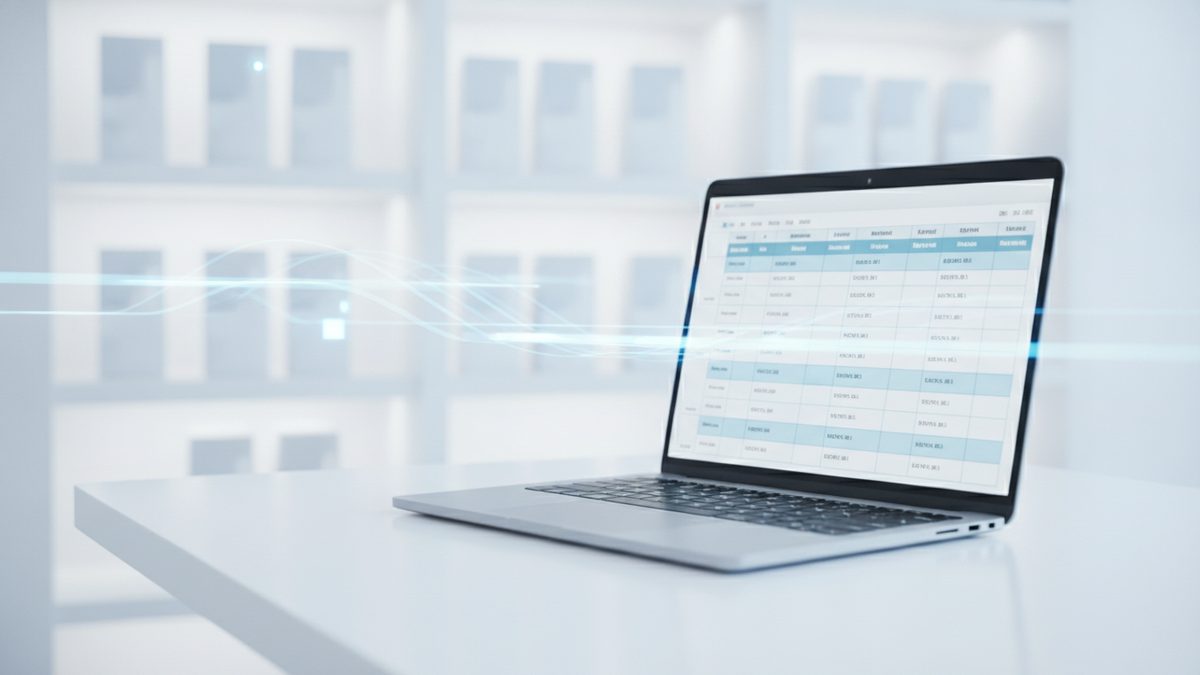
The AI is only as good as what it knows, and the thing it knows is a spreadsheet. Every night, an automation reads the store's live product catalogue from their website and writes it into a Google Sheet, one row per product. Prices, new lines and discontinued items look after themselves, because the sheet is rebuilt from the source rather than maintained by hand.
Here is what that looks like. The data below is made up for illustration, but the shape is exactly what the real one uses:
| product_code | name | type | price | page_yield | compatible_printers |
|---|---|---|---|---|---|
| TN-253BK | TN-253 Black Toner | Genuine | $89.99 | 2,500 | HL-3230CDW, DCP-L3510CDW, MFC-L3770CDW |
| TN-253BK-C | TN-253 Black Toner | Compatible | $34.50 | 2,500 | HL-3230CDW, DCP-L3510CDW, MFC-L3770CDW |
| TN-257C | TN-257 Cyan Toner (high yield) | Genuine | $119.00 | 2,300 | HL-3230CDW, MFC-L3770CDW |
| DR-253CL | DR-253CL Drum Unit | Genuine | $168.00 | 18,000 | HL-3230CDW, DCP-L3510CDW |
| LC-3319XLBK | LC-3319XL Black Ink | Genuine | $44.99 | 3,000 | MFC-J5330DW, MFC-J6930DW |
| CF279A | 79A Black Toner | Genuine | $129.00 | 1,000 | LaserJet Pro M12a, MFP M26nw |
Two columns are doing more work than they look. compatible_printers is what lets a caller say "I've got a Brother MFC-L3770" and get a straight answer, because the printer model is written into the row rather than the customer being expected to know the cartridge code. And type, which flags each item as genuine or compatible, is what allows the agent to offer a real choice: the same cartridge at $89.99 or $34.50, which is usually the question the customer actually wanted to ask.
!
Why this matters: because the printer model is written into the row, a caller never needs to know the cartridge code. They describe their printer, and the agent finds the part.
Part Two: The Voice Agent, and How It Uses That Sheet
The second piece is the voice agent itself, which answers the phone in a New Zealand voice and holds an ordinary conversation. The important part is that it does not have the catalogue memorised. It has a lookup tool, and it uses it mid-conversation.
A typical call runs like this:
- The caller says what they need. Usually a printer model, sometimes a code read off the old cartridge.
- The agent asks one question at a time to pin it down: which printer, then which product and colour. Never both at once.
- It quietly calls the lookup, which searches the sheet across product codes, product names and that compatible_printers column, and returns the matching rows.
- It reads back what it found to confirm it has the right thing, then presents the genuine and compatible options with the price difference and the page yield.
- It captures the caller's name, confirms the number they are ringing from, and takes their email spelled out letter by letter.
- The team gets the enquiry with everything on it, and confirms the final price and stock.
Notice what the agent deliberately does not do. It does not take payment, promise stock, or tell the customer their order is placed. It quotes the current online price and says the team will confirm. That boundary is the difference between a system that helps and one that creates problems for the people who have to honour what it said.
An Excerpt of the Actual Instructions
The agent's behaviour comes from a written brief, in plain English. It is long, and most of it is specific to this store, but the core conversation rules give you the gist:
## CRITICAL CONVERSATION RULES

1. You have already greeted the caller. Do NOT greet again.
2. ONE question at a time. Never ask two things in one turn. Wait for the answer.
3. Keep every response to 1-2 short sentences. No monologues.
4. Use ONLY facts from the lookup tool or the FAQ below. Never invent or
   estimate a price, cartridge code, printer model, stock level or delivery date.
5. If a response does not fit the question, ask them to repeat. Transcription
   errors are common, so never act on something that does not make sense.
6. Be honest you are an AI assistant if asked.

## Slow down for read-backs

Put a comma after every digit or letter so the voice pauses on each one:
  Phone: "oh, two, seven. four, five, five. three, eight, three, two."
  Code:  "T, N, two, five, three."
Rule four is the one that matters most, and it is what makes this safe to put on a real phone line. Every factual claim the agent makes is tied to a lookup result from your own catalogue, so the price and the product code a customer is told are the ones on your website. That is a higher bar than most phone answering manages, because it is checking rather than recalling.
The read-back rule is a good example of how much of this work is unglamorous detail. Text-to-speech reads "0274553832" as a single blurted number that nobody can write down. Commas between the digits force it to slow down, so the customer can actually check it. Small thing, and it is the difference between a confirmation that works and one that has to be repeated three times.
What the Customer Experiences on the Call
From the caller's side, none of the above is visible. What they get is:
Somebody picks up. First ring, at any hour, including the Sunday evening when the printer died before a Monday deadline. No hold music, no queue, no "your call is important to us".
They can describe the problem in their own words. They do not need the cartridge code. "It's a Brother, the one that does double-sided" gets them further than it would with most phone systems, because the agent can ask a follow-up rather than requiring an exact match.
They get the price both ways. Genuine and compatible, side by side, with the page yield so they can work out the real cost per page. That is a more useful answer than most human staff give, because the agent is reading it off the catalogue rather than recalling it.
Nothing gets lost. Their details, printer model and the exact product they were quoted arrive with the team in a structured summary. They do not have to explain it all again when someone calls them back.
The result for the business is that a call which previously went unanswered now becomes a qualified enquiry with a product attached to it, ready for someone to close.
What the Store Gets Out of It
The caller experience is half of it. The other half is what changes on the business side, and for an ecommerce store it lands in five places.
Calls stop being a cost centre. For most online stores the phone is treated as an interruption to fulfilment work. Once it is answered automatically, it turns back into a sales channel, and one with better intent than most website traffic, because the person calling has already decided to buy.
Higher order values on the calls you were missing. When the agent presents the genuine and compatible options side by side with the page yield, customers frequently take the higher-yield product once they can see the cost per page. A staff member working from memory rarely offers that comparison consistently. The catalogue does it every time.
Repeat customers get captured, not lost. Consumables and parts are reorder businesses. Capturing the first enquiry with the product, the printer model and the contact details attached means the second order is a follow-up rather than a fresh acquisition.
You find out what people actually ask for. Every call produces a structured record: which models come up, which products get requested, where callers hesitate on price. That is demand data an ecommerce store normally only sees through search logs, and it tends to shape what gets stocked and what gets featured on the site.
It scales with the catalogue, not with headcount. Adding 300 products does not require anyone to learn 300 products. The sync picks them up and the agent can quote them the same night, which is the part that is genuinely difficult to replicate with people.
Is This Right for Your Store?
The pattern fits best when a few things are true. You have a catalogue big enough that no single staff member holds it in their head. Your callers ask questions with factual answers, like what fits, what it costs, how long it lasts. Your products are in a system that can be read automatically, such as a website store, an inventory tool or even a maintained spreadsheet. And you are currently missing calls, or answering them with someone who has to say "I'll find out and call you back".
If your phone traffic is mostly bespoke quoting or account negotiation rather than product questions, the phone is simply not where your best first AI project sits. In those businesses the bigger wins are usually in quoting, follow-up and reporting, and that is worth working out before you build anything.
For a store selling consumables, parts, or anything where the customer is holding the old one and wants the right replacement, it is one of the highest-return things you can automate. The call was already lost. Now it is an enquiry.
Ecommerce AI: Common Questions
How is AI actually used in ecommerce?
Most of the attention goes to product descriptions and chatbots, but the higher-return uses are usually in operations: answering the phone and qualifying enquiries, syncing catalogue and stock data between systems, chasing abandoned carts, generating and sending review requests after delivery, and turning order data into reporting that does not need a spreadsheet rebuild every month. The rule of thumb is that AI pays best where a job is repetitive, happens constantly, and currently gets skipped when you are busy.
Do online stores still need to answer the phone?
More than most owners expect. For considered or technical purchases, a phone call is what a customer does when the website has not answered their question, which means callers are further down the buying process than browsers. In a consumables or parts business, the caller is usually holding the old item and wants to know what replaces it. Those calls convert well, and they are the ones most likely to go unanswered because they arrive while you are packing orders.
Can AI connect to my Shopify or WooCommerce catalogue?
Yes. Most ecommerce platforms expose their products through an API or a data feed, so the products, prices and variants can be pulled automatically into a working data set the AI reads from. In the build described here, the store's catalogue syncs nightly into a spreadsheet the voice agent queries during calls. Because it rebuilds from the store rather than being maintained by hand, price changes and new lines carry through without anyone updating a script.
How does AI improve customer service for an online store?
It removes the wait. A customer gets an answer at the moment they ask, including outside business hours, rather than leaving a message and hoping. It also improves consistency: the answer comes from your live catalogue, so the price and compatibility a customer is told matches what is on the site. The practical effect for a small store is that it can respond like a much larger one without hiring for evenings and weekends.
Will AI give customers the wrong product or price?
It can if it is built carelessly, which is why the guardrails matter more than the voice. The agent should be restricted to facts returned by a lookup against your real catalogue, forbidden from estimating a price or completing a product code it is unsure of, and required to frame prices as the current online price your team will confirm. Built that way, it is more consistent than a staff member working from memory, because every answer traces back to your store data.
What does ecommerce AI cost in New Zealand?
It is scoped per store rather than sold off a rate card, because a 200-product store taking a few calls a day and a 5,000-product supplier with a full phone line are different builds. Voice work is usually priced per call, so it scales with volume instead of being a flat licence. The test we apply is whether the recovered orders or saved hours clearly exceed the running cost, and if they do not, we say so rather than building it.
If you want to know whether your catalogue and your call volume make this worth building, that is exactly what we work out in a 30-minute audit. You can also see the rest of our ecommerce AI tools for New Zealand stores. We map where your calls are leaking, what it would take to answer them, and what each fix is worth. You keep the roadmap either way.